

A customs code is a unique combination of numbers that identifies a particular category of goods in global commerce. It was created to make it easier for shipments to pass through customs and to classify them according to worldwide import/export rules. This article will give you an overview of customs codes and their varieties.
Understanding the customs code
Using a customs code – a specific system covering almost all commercial product varieties – makes international business more efficient.
Codes allow shippers to obtain data on duties, restrictions, or the need for licenses and to compute statistics on multinational trade for each commodity category.
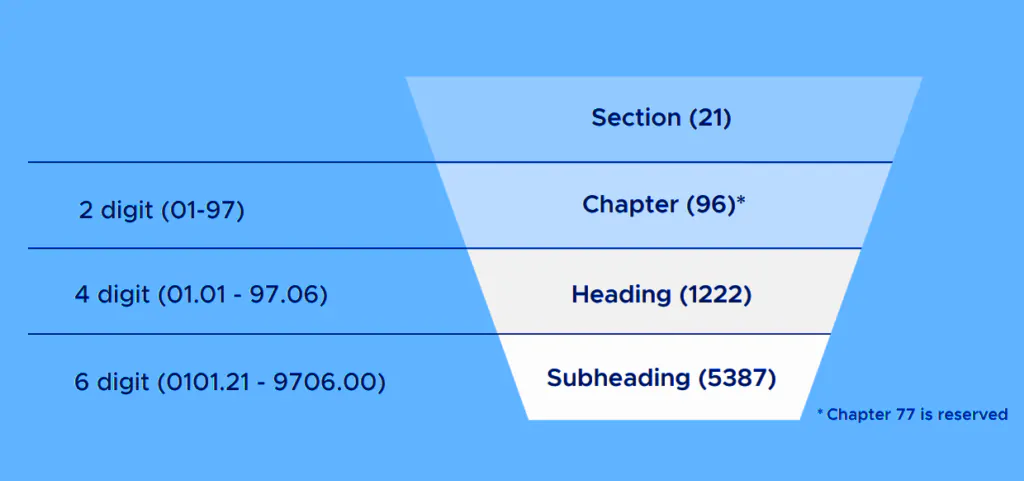
The initial six digits are common to all customs codes for the same type of product:
- first two numbers: name
- the following two numerals: heading
- and two digits at the end: the subheading.
Product codes are generated grounded in the Harmonized System (HS) codes within alternative tariff frameworks, often adding additional digits. Some tariff nomenclatures have specific subheadings for a particular type of product, while others do not require them.
Verifying the Customs Code
Customs commodity codes refer to tariff schemes that may differ for each country. On a particular website dedicated to tariff codes, enter the name of your product or select the appropriate section. Each item of merchandise includes a list of applicable taxes.
Certain types of customs codes are tied to different duty rates. For example, to determine the duty on goods from China that will be imported into the European Union, apply the obligation listed in Erga Omnes in the TARIC directory.
Application of Customs Codes across various countries
The basis of a customs code comprises six numerical digits, but different nations can include supplementary numbers for a more precise definition of goods.
Harmonized System (HS) Code
The HS system is a globally uniform product classification system by the World Customs Organization.
The code’s first six characters contain information on the merchandise category and the customs tax applicable to its importation. They are the same and are used internationally for all WCO member countries (more than 200 members).
Harmonized Tariff Schedule
It is the main customs code for shipping products into the United States. It determines duty rates, measures against dumping, reduction or increase of tariffs, compliance with the requirements of regulatory authorities, etc.
Furthermore, it contains ten digits, the last four denote numbers peculiar to the States. These numbers establish the categorization of goods, the requirements for imported products, and the applicable charges.
Combined Nomenclature (CN)
This is the system used when entering the European Union. It sets tariff conditions and determines the volume of trade in the EU. The code designates information through its seventh and eighth numeric characters that indicate belonging to this nomenclature (more than 9500 commodity names). They also reveal the specific duty for each category.
The ninth and tenth digits refer to the code TARIC. This complex European Union tariff designates and allocates duties when importing and exporting products into and out of the EU.
TARIC divides commodities into categories and subcategories with specific types of merchandise.
ASEAN Harmonized Tariff Nomenclature (AHTN)
Member states within the Association of Southeast Asian Nations utilize the ASEAN Harmonized Tariff Nomenclature, under which the initial 6 digits from the global HS codes remain in use, with a few additional numbers appended at the end to specify the item’s type.
The eight-digit AHTN coding applies for goods shipments within ASEAN, but HS codes are also recognized as legal.
Illustrative instances of Customs Codes
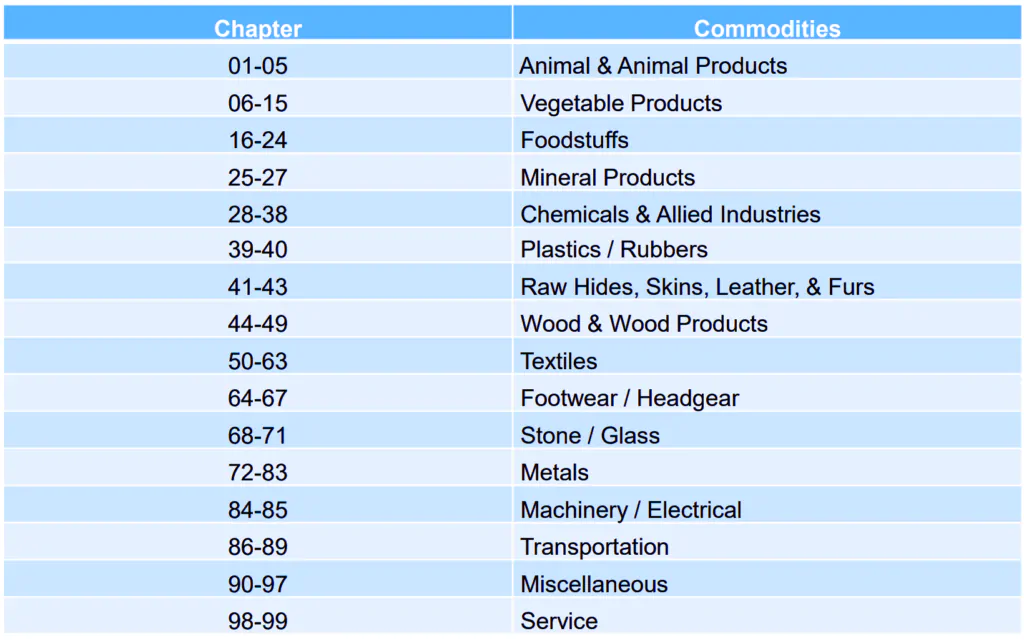
What do the numbers in the code mean? The first two identify the section to which the HS code belongs. There are 21 sections, each providing a generalized description of a specific category of goods. The following four numbers comprise the heading and subheading of the section.
Here is one example of a customs code for the product category “shirts”:
| Customs code | Description |
|---|---|
| 61051000 | Cotton shirts, knitted or crocheted, designed for men or teenagers |
| 61052010 | Shirts of man-made synthetic fibers for boys or men |
| 61052020 | Shirts of artificial fibers for men/older boys |
| 61059000 | Shirts of other textile materials for men or adolescents |
Dealing with incorrectly assigned Customs Codes
First, check the customs code assigned by the supplier – it may need to meet the destination country’s requirements. The regulations specified in TARIC, HTS, or AHTN differ. A common problem of importers is blind trust in the data provided by the factory or seller. As a result, the importer needs to receive a correct duty value for the goods.
Incorrectly assigned code – means penalties for failure to adhere to import regulations. It also determined that the classification of products represents a revision of the number of import duties. It happens the other way around. If the sender overpaid for the incorrect code, he can request a refund and revision of the product code.
Important: Even if you have contacted a logistics company and it becomes your contractor, the shipper is responsible for correctly identifying the customs code.
If you have doubts about the correctness of the code assignment, please check with Global Unity Logistics – the professionals of our logistics company will be happy to help you.