
When checking international shipments at the border, delays or even bans on transportation may occur. That’s because your products may be dangerous. What do you need to know about the shipping of dangerous goods, and what documents should you prepare throughout cargo shipping to the destination country?
Calculate the cost of cargo delivery
What are dangerous goods?
Dangerous goods are objects, materials, or liquids potentially harming human health or the environment. They can also cause damage to commercial shipments if transportation regulations are violated.
International dangerous goods shipping requires compliance with mandatory transportation regulations.
The rules for the transportation of complex cargoes are prescribed by the International Maritime Organization (IMO), the UN, and IATA, which regulates the goods shipping by air. These documents contain instructions on how dangerous cargoes should be packed and transported and their handling and labeling.
If you need this service – you can consult with Global Unity Logistics specialists about the delivery geography and conditions of preparation for shipment of complex and dangerous goods.
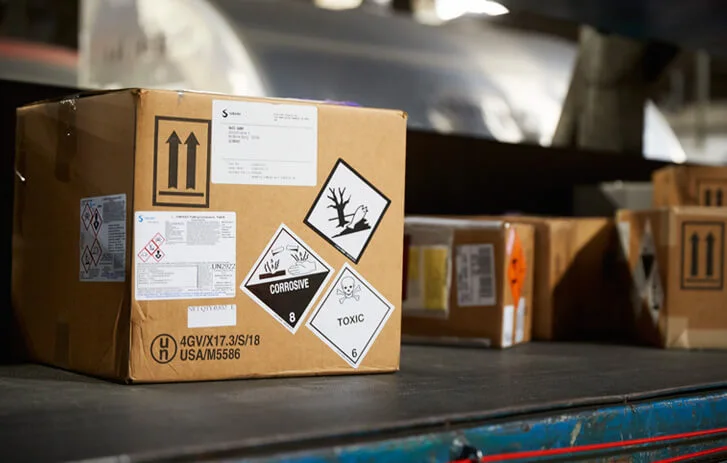
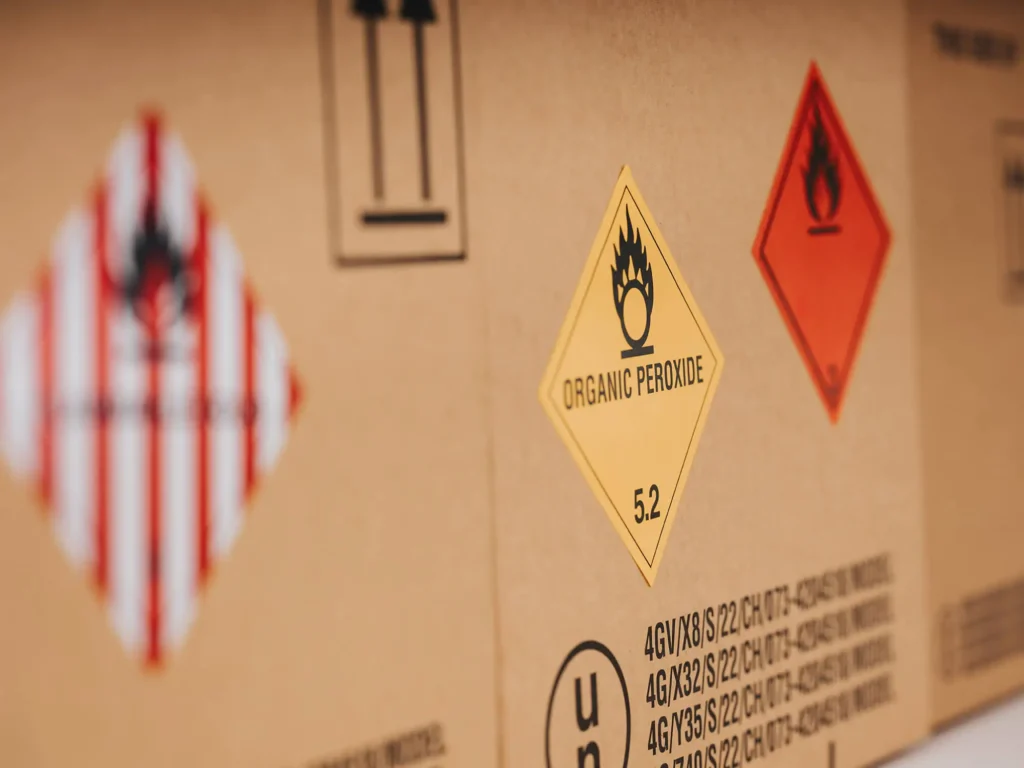
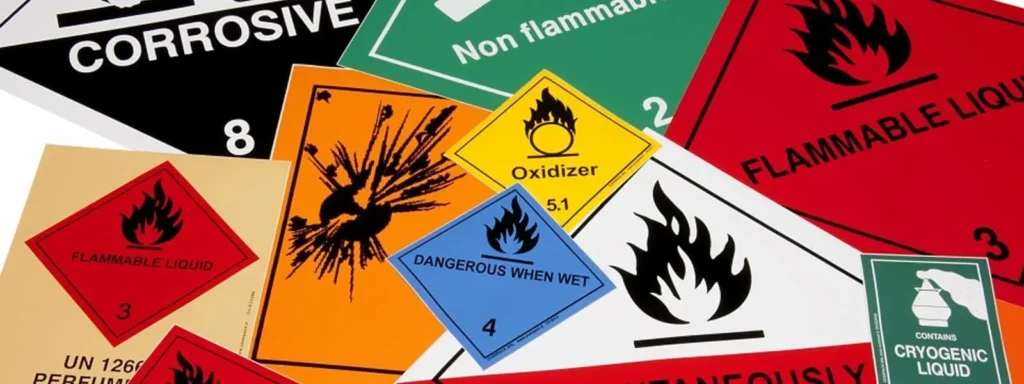
Classes of dangerous goods
Class One: Explosive Materials and Substances
This includes items or materials that can ignite or explode due to a chemical reaction. They cause damage by releasing large amounts of energy.
Subcategory 1.1: Explosive materials with a risk of mass explosion. It is possible to destroy the entire cargo at once.
Subcategory 1.2: Explosive materials with risk of dispersal. It is not explosive but may result in the spread of fragments.
Subcategory 1.3: Fire Hazardous Explosive Materials. It may cause ignition, partial explosion, and scattering, but not mass explosion due to improper handling.
Subcategory 1.4: Materials or substances with a low risk of combustion or scattering. There is a low probability of explosion, mainly within the cargo, with no outbreak of the package or release of fragments.
Subcategory 1.5: Insensitive materials with risk of mass explosion. Insensitive but have a chance of explosion. Carefully observe optimum conditions to prevent ignition.
Subcategory 1.6: Extremely insensitive substances or materials. These goods have minimal potential for ignition, with no explosion.
| Dangerous goods of Class One | |
|---|---|
| cyclonite | explosive devices |
| pyrotechnic accessories | detonators |
| flares | ignition devices |
| fireworks | TNT |
Class Two: Gaseous substances
It is compounds that turn into gas at a standard atmospheric pressure of 20 °C and materials with a vapor pressure in the system of 300 kPa or higher than 50 °C, as well as products containing these substances.
Subcategory 2.1: Easily flammable gases. Ignite on contact with a flame (e.g., acetylene or hydrogen) and combine with air (concentration by pressure 101.3 kPa and volume 12-13%).
Subcategory 2.2: Non-combustible gases. These are cryogenic gases and liquids with a temperature of -100 °C, or even lower, and any matter that creates an absolute pressure of 280 kPa at 20 °C when packed.
Subcategory 2.3: Poisonous gases. It can cause complications from inhalation up to and including death. Toxic gas is a compound that vaporizes at 101.3 kPa and 20 °C. It is presumed to be poisonous at an LC₅₀ value of 5000 ml/m3 or less.
| Dangerous goods of Class Two | ||
|---|---|---|
| fire extinguishers | gas sprays | ethane |
| butane | hydrogen | lighters |
| aerosol cans | methane | acetylene |
| ethylene | insecticides | helium |
Class Three: Readily flammable Liquids
During the shipping of dangerous goods, products of this class begin to burn at temperatures equal to or above 61 °C. However, the international limit for this class set by the UN usually is 60 °C. The shipment may be transported if the substance’s temperature exceeds this limit.
Class 3 liquids are categorized into three subgroups based on their flash point:
- those with a flash point below -18 °C;
- followed by liquids that react at -18 °C to 23 °C;
- and those above 23 °C.
| Dangerous goods of Class Three | ||
|---|---|---|
| biofuels | naphthalene | paints |
| diesel fuels | carbamate insecticides | esters |
| perfumes | pesticides | varnishes |
| diesel oil | acetone | coal tar |
| shale oil | glue | ethanol |
Class four: flammable solids
These substances release gases that ignite readily or spontaneously in contact with water.
Subcategory 4.1 includes solid desensitized explosives, flammable solid substances, and self-reactive materials.
Subcategory 4.2 includes spontaneously combustible substances that flash when mixed with oxygen. They can be either solid or liquid.
Subcategory 4.3 represents flammable substances that ignite by reacting with water.
| Dangerous goods of Class Four | ||
|---|---|---|
| sodium battery | oxide | matches |
| alkali class metals | aluminum phosphide | celluloid |
| sulfur | copra | cerium |
| metal powders | lighter | phosphorus |
Class 5: oxidizing agents and organic peroxides
These substances react with organic pesticides and oxygen during chemical processes. Therefore, the requirement for delivering such goods by different modes of transportation implies the implementation of clear instructions.
Subclass 5.1 distinguishes a group of oxidizing agents. Agents are chemically active due to their high oxygen content. They can react with combustible substances, causing fire. At elevated temperatures, they explode.
Subclass 5.2: Organic peroxides, which, because of the bonding of carbon to the peroxide, can catch fire. These chemicals are unstable and explosive because they can disintegrate at elevated temperatures and cause combustion.
| Dangerous goods of Class Five | |
|---|---|
| nitrites | permanganates |
| perchlorates | oxygen generators |
| ammonia fertilizers | persulfates |
Class 6: Toxic and infectious substances
Shipping of dangerous goods of the sixth class is regulated as strictly as the other categories. By violating even one transportation rule, the carrier risks irreparable damage to the health of crew members or damage to the goods themselves.
Subcategory 6.1: Toxic substances that threaten a living being by inhalation, ingestion, or skin contact.
Subcategory 6.2: Infectious substances in which pathogenic microorganisms, such as rickettsiae, bacteria, viruses, fungi, and parasites, provoke diseases in animals and humans.
| Dangerous goods of Class Six | ||
|---|---|---|
| adiponitrile | alkaloids | acids |
| biomedical waste | allyl | arsenites |
| dyes | hexachlorophene | cresols |
| nicotine | chloroform | beryllium |
| antimony | cyanides | mercury |
Class 7: Radioactive materials
Radioactive isotopes containing radionuclides are atoms with an unstable nucleus with a specific activity above two nCi/g. Radiation is released during the decay of radionuclides.
| Dangerous goods of Class Seven | ||
|---|---|---|
| uranium concentrates | americium | measuring equipment |
| uranium | fission product mixtures | cesium |
| medical isotopes | radium | radiation emitting items |
Class 8: Corrosive and corrosive substances
International dangerous goods shipping defined that there are substances which, when accumulated, damage living tissue, products, or materials during contact. In case of spillage, they cause injury to people and living organisms and can destroy goods.
| Dangerous goods of Class Eight | ||
|---|---|---|
| amines | iodine | polyamines |
| cartridge fluid | dyes | sulfides |
| formaldehyde | chlorides | mercury |
| battery acids | fire extinguisher fluid | polysulfides |
| fuel cells | alkylphenols | various acids |
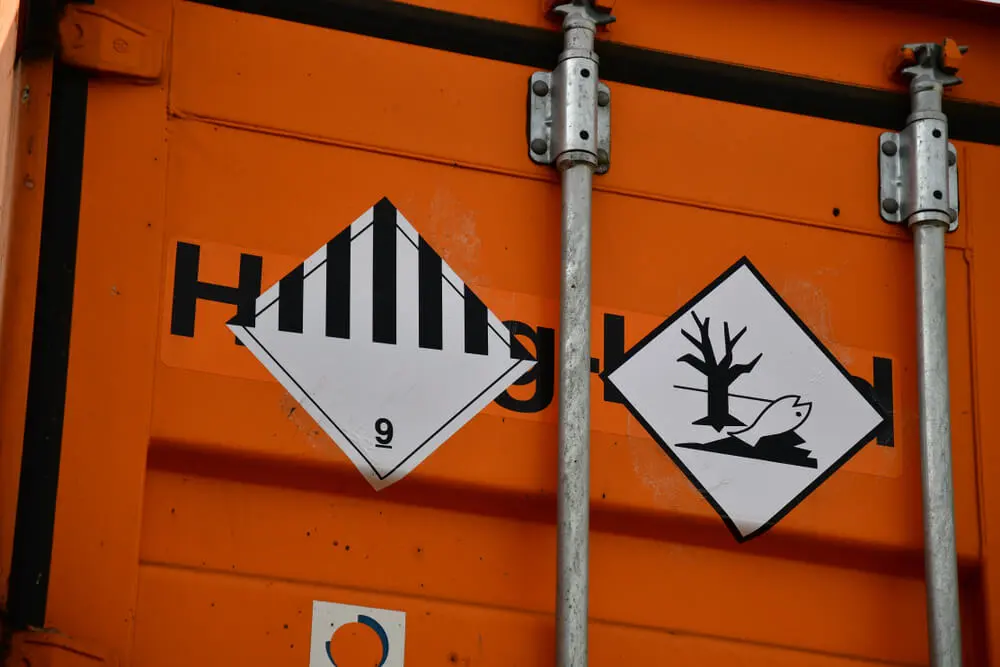
Class 9: Other hazardous materials
Shipping dangerous goods internationally distinguishes the last class of hazard. This section includes hazardous substances and things that do not fall into other categories. These include environmentally hazardous substances, materials that cannot tolerate high temperatures, GMOs, and magnetic items.
| Dangerous goods of Class Nine | |
|---|---|
| dry ice | lithium-ion batteries |
| a granular polymer that foams | first aid kits |
| ammonium nitrate substances | modified microorganisms |
| crocidolite | airbag modules |
| fuel cell engines | castor oil products |
If you want to accurately determine whether your cargo is dangerous and to which category it belongs – please contact our managers for consultation.
Documenting and Paperwork Requirements for the Transportation of Dangerous Goods
The documents required for carriage and successful delivery of dangerous goods may vary, depending on the hazard class of the goods, the vehicle on which it is to be delivered, and the weight and quantity.
Potential hazards are usually listed on the Material Safety Data Sheet.
The primary documents required to ship dangerous goods overseas include:
- Certificate of Quality for the products
- MSDS safety data sheet
- Invoice and packing list
- Documents for shipping dangerous goods (air freight – airway bill, sea freight – bill of lading)
- Certificate of Origin (if required)
- Additional documents (weathering certificate, CoA or Certificate of Analysis, CAA or Competent Authority Authorization.
We can provide a high-quality dangerous goods shipping service to Amazon and other marketplaces. We clarify innovations in transportation and customs clearance rules at the border and check whether all the documentation has been collected so that your cargo arrives at the address on time.
Safe Packaging and Handling of Dangerous Goods in Transit
Some shipments, such as perfumes or flammable liquids, are poured into glass containers that can easily break during delivery. Therefore, more packing paper, cardboard, or film should be used around the bottle to prevent the liquid from leaking out before sending the shipment.
Ensure that the voids in the box are filled with dense but soft material, foam, or bubble wrap. Additional packing material will help avoid shifting the box during transportation and damage to the goods or packaging.
Particular attention should be paid to unique labels on the boxes. If the labeling is incorrect, the goods may not be allowed aboard the ship or seized.
Requirements for transportation of dangerous goods may differ for sea ship or air freight. Dangerous goods and their delivery can raise many questions, so getting full advice from a professional logistician before shipment is advisable.
Guidelines and Rules Governing the Shipment of Dangerous Goods
Each mode of transportation has its rules, instructions, and recommendations for delivering dangerous goods. It is recommended to read each of them before shipping any goods.
The IATA Dangerous Goods Regulations govern the transportation by air of each dangerous object or substance and their permissibility and shipping conditions.
The International Maritime Dangerous Goods Code (IMDG) guides how to transport dangerous goods by sea. Transportation by truck is subject to regulation by the European Agreement concerning the International Carriage of Dangerous Goods by Road (ADR).
FAQ
These two categories are separated by their impact on the environment, people, and consequences. The first group – hazardous substances – affects health (both immediate and long-term). The second – dangerous goods – is divided by implications, such as poisoning, fire, corrosion, and explosion.
Devices with lithium batteries, some cosmetics, household chemicals, lighter gas, pharmaceuticals, dry ice, fireworks, Freon, pool chlorine, fly and mosquito repellent sprays, enamel paints, and car varnishes are considered hazardous.
Determine the exact hazard class of the goods. Consider storage temperature and the likelihood of flammability (some shipments are transported in temperature-controlled containers). Prepare and assemble the correct transportation documentation. Be sure to label the cargo! Give the carrier the necessary handling, transportation, unloading, and storage instructions.